Showing posts with label Nokia. Show all posts

Wednesday, January 30, 2008

Nokia 5310 XpressMusic Review


The Nokia 5310 XpressMusic is a compact & versatile music phone which the user will be proud to own. The handset is incredibly stylish which comes in a mainly black coloured casing complete with coloured sections which makes this phone look very fashionable. The 5310 XpressMusic comes with a choice of either bright red or bright blue coloured sections which highlights the phones large screen & dedicated music keys. The screen is 2 inches in size & has a high resolution & high colour display for the user to enjoy a full colour experience on their screen. The handset is compact & thin which measures 9.9mm in depth, 44.7mm in width & 103.8mm in length. The phone is lightweight therefore easy for the user to carry with them at all times which weighs 71 grams including the battery. The 5310 XpressMusic is a member of the XpressMusic family which includes other music orientated stylish handsets including the Nokia 5300 XpressMusic & Nokia 5700 XpressMusic.

This music focused mobile phone comes with an easy to access music player which supports MP3, MP4, AAC, eAAC+ & WMA music formats. The user can access & control their music easily using the three dedicated music keys which are situated to the side of the high colour screen. The Nokia 5310 XpressMusic comes with high quality music features including album art, music playlists & an equaliser. The user can listen to their favourite tunes over the phones speaker system or simply plug in the headset provided in the kit to experience a private listening experience. This phone will certainly keeps its music loving user entertained with up to 18 hours of music playback time & the 5310 XpressMusic can store approximately 3000 tracks for the user to enjoy. The user can search for music & games on the Internet by accessing the XHTML browser on their Nokia 5310 XpressMusic.

The phone comes with preinstalled games which include music guess, snake III & citybloxx games. The phone Nokia 5310 XpressMusic supports Java™ games & applications which allows the user to download more games of their choice. The user can access their games whilst on a plane using the flight mode feature. The user can store up to 2,000 contact names with up to three contact numbers under each contacts name. The calendar feature can hold up to 3,000 entries at any one time including Birthday reminds & appointments. The 5310 XpressMusic comes with easy to access countdown timer, clock, alarm, stopwatch features & much more.

The 5310 XpressMusic comes with thirty Mbytes of built in memory & the phone supports MicroSD™ memory cards which allow the user to add a memory card up to 4 Gbytes. The phone works over a tri band technology which works over GSM 900, 1800 & 1900 networks. A fully charged battery will provide the user with approximately 300 hours of standby time or 5 hours of talk time. The user can transfer music files & download music easily using either a Bluetooth™ wireless connection or a USB cabled connection between compatible devices.

The user can capture photographs & video clips using the integrated 2 megapixel camera feature. The camera comes with a useful zoom feature which allows the user to get closer to their subject when taking a shot. The zoom is a 4 x digital zoom & the user can view their subject on the 2 Inch high resolution screen. The phone supports video capabilities which allow the user to view & record their video clips. The user can share their photographs & video clips with others by using the MMS messaging service or the email service with supports attachments. The user can create an email complete with an attachment in JPEG, 3GPP, MP3, PPT, DOC, XLS or PDF format. The MMS messaging service allows the user to send & receive messages complete with photographs, images or video clips with sound & text.


Nokia 5310 XpressMusic Specifications & Features

Screen
2 inch 16.7 Million Colour QVGA Screen (240 x 320 Pixels)

Imaging
2 Megapixel Camera
4 x Digital Zoom
Ambient Light Sensor
Photo Editor
Video Record
Video Player
Animated Colour Screensavers
Colour Wallpaper

Messaging
SMS (Text Messaging)
MMS (Multimedia Messaging)
Email (IMAP4, POP3 & SMTP)
Email Attachment (JPEG, 3GPP, MP3, PPT, DOC, XLS & PDF)
Nokia Xpress Audio Messaging
Predictive Text

Sound
Music Player (MP3, MP4, AAC, eAAC+ & WMA)
Three Dedicated Music Keys
Loudspeaker
Stereo Headset
Real Time Equaliser
Album Art Display
Playlist
Video Ringtones
MP3, MP4, Polyphonic MIDI Ringtones

Entertainment
Music Guess Game
Snake III Game
Citybloxx Game
Java™ Games
Downloadable Games
Organiser
Phonebook (2K Contacts)
Calendar (3K Entries)
Alarm Clock
To Do List
Notes
Clock
Stopwatch
Countdown Timer
Calculator
Converter
Flight Mode

Connectivity
Bluetooth™
USB
GPRS
HSCSD

Network
Tri Band Technology (GSM 900, GSM 1800 & GSM 1900)

Internet
XHTML Web Browser
WAP 2.0

Memory & Talk Time
30 Mbytes Memory plus MicroSD™ Memory Option up to 4 Gbytes
5 Hours Talk Time
300 Hours Standby

Weight & Size
70 g
103.8 x 44.7 x 9.9 mm


Source: www.yourmobilephonereviews.co.uk

Sunday, January 27, 2008

Nokia N82 mobile phone

Nokia's flagsip mobile phone is the N95 8GB, but that still hasn't stopped the Finish company from launching the N82 a pseudo N95 with a focus on the digital camera elements rather than an overall multimedia device. But is it just a candy bar version of the N95? We get phoning to find out.


Described as "the latest multimedia computer optimized for photography, navigation and internet connectivity" the Nokia N82 is a candy bar handset that comes in a plastic and metal finish. Dimensions are 112 x 50.2 x 17.3 mm while it weighs 114g slightly lighter than the N95.

Tech specs include A-GPS, a 5-megapixel camera, Xenon flash, Carl Zeiss optics and internet connectivity alongside HSDPA and Bluetooth connectivity.

The design, which is large and fat is also confusing to use with too many menu shortcut buttons cluttering the keypad. Do you really need two dedicated menu buttons for example? In fact there are 12 shortcut keys beyond the 12 numeric keys, all of which are fiddly and like Sony Ericsson's W880 prickly to use.

If that wasn't enough buttons for you, then there are a further four buttons on the top side for the camera function and that's not including the on/off switch or the lens cover slider for the camera.

Compared to the iPhone's four buttons, the tally of 29 is impressive.

Get past the buttons and the, in our mind, ugly design, and you've got the Symbian S60 software interface as found on most of the Nokia N series handsets.

With two menu buttons you have two ways of looking at the applications in addition to the home page and you can either opt for a rotating page system (which works like Apple's Coverflow interface) or for the more traditional amongst us via icons in a grid formation.

Applications of note here are the A-GPS and preinstalled Nokia Maps that allow you to find your way around and users can buy additional features, such as city guides and longer subscription to the navigation.

The A-GPS works extremely well in locking on to a GPS signal when you are in doors and compared to the first N95, finding where you are is a lot quicker.

Additionally maps have now been stored on the device from the start meaning you don't have to download as you go, again speeding up finding directions and you can get voice guidance so you don't have to look at the small screen to know where to turn next however this is an optional paid for extra.

Map excerpts and routes can be sent to friends by MMS or users can save map screen shots to the gallery.

Like the Nokia N95, one of the main reasons to get the N82 is the 5 megapixel camera. Exactly the same as the N95 the only difference here is the inclusion of a Xenon flash, the same as the Samsung G800, and picture quality was good.

The camera is more responsive than the first N95, comes with autofocus with a dedicated autofocus assist lamp, fast reloading between shots and DVD-like quality video capture however it doesn't have an optical zoom as found in the G800.

Thanks to the 2GB microSD card in the standard Nokia N82 box, you can store up to 900 high-resolution photos or up to 84 minutes of high quality video on the device, although customers opting for the N95 8GB will clearly be able to store more of everything.

Like the N95 the N82 has Wi-Fi connectivity and one-click upload to online communities allowing you to share content to flickr or Vox.

Games wise the phone supports the N-Gage platform and games are vastly improved on previous efforts from Nokia outside of the N-Gage handsets however we found it frustrating that you aren't able to opt to rotate the screen to play landscape.

Source: pocket-lint.co.uk

Saturday, January 26, 2008

New Virtual Keyboard Imagined by Nokia

Nokia keeps on filing patent applications with the clear intention to make future improvements in the way users interact with mobile phones. After a patent filed in December

2007 for a 2 in 1 keypad idea, now the Finnish company has another keyboard-related idea, but this time we are talking about a virtual one (the keyboard, not the idea).

The new concept requires, first of all, a phone with a built-in camera and optical sensors and comes to enhance the way we write text messages or e-mails on our phones – we all know it's not really the fastest way to do it, due to handsets' reduced sizes. Samsung has found a way to overcome this drawback, by adding projectors to phones, in order to project a virtual (and large) display that will enable easy text input. However, this is also just a concept and it will be a while until it can be functional.

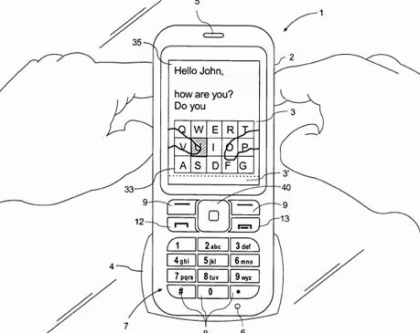
Nokia, in return, comes with a virtual keyboard that doesn't require additional equipment, since photo cameras are now becoming common for most mobile phones. The patent application, entitled "Mobile device with virtual keyboard", reveals an entirely new concept: the main idea is to use the built-in camera for capturing user's fingers movement. As seen in the picture from the patent, the phone would sit in a special cradle, in a vertical position, while the user types behind it, allowing the camera to record its moves and send the data in real time to the phone's screen, where both a virtual keypad and the entered text are displayed. Furthermore, the handset would also come with sensors capable of capturing vibrations and sound generated by users and translate them into input commands, but we don't have more details about how exactly this works.

While some might say that text input could be simply done with a hardware QWERTY keyboard (like the ones packed in Nokia E90 Communicator or HTC TyTN), the new virtual keypad from Nokia might be a much better option. Or at least that's how it seems now, when the keypad is only a concept. Nevertheless, this idea is surely interesting and may really improve the text input on mobile phones but, as any new concept, it has to overcome many implementation difficulties until it becomes usable.

Source: softpedia.com

Friday, January 25, 2008

Nokia Finally Reached 40 Percent of the Global Market Share

Nokia announced its financial results for 2007 and reported that it has reached 40 percent of the global market share, a goal that the company had
for some time but never managed to achieve it. This was possible thanks to the excellent sales from the fourth quarter of 2007, when a total of 133.5 million Nokia devices were sold.

According to the press release from the Nokia website, the total number of mobile devices shipped by the company world-wide in 2007 raises to 437.1 million, which represents a new annual volume record. This is an increase of 25.8% when compared to the 374.5 million units sold in 2006. Furthermore, the 2007 net sales have reached a value of 51.1 billion Euro, with 23% more than the net sales from 2006.

Besides the overall increased sales, which sure make Nokia officials satisfied, the Finnish company also reported a surprising decline in sales on the North American Market, where only 19.4 million handsets were sold during 2007 – with 23.3% less than in 2006, when 25.3 million units were shipped. However, all the other markets reported increased sales for 2007, especially Middle East & Africa, where 75.6 million handset were sold, and Asia Pacific, where no less than 112.9 millions Nokia handsets were bought.

As always, Europe comes in the first place when talking about Nokia phones sold, with 117.2 million handsets shipped. This fact might change in the next years, as Asia-Pacific is a blooming mobile market that already has an important role in Nokia's business.

The 2007 net sales increasing for all the Nokia products and services (including services from the Nokia-Siemens joint venture) brought a net profit of 7.2 billion Euro to the company, a 67% increase compared to the 4.3 billion Euros in 2006. So it seems that things are brighter than ever for the Espoo-based manufacturer, at least when it comes to financial results.

Source: softpedia.com

Saturday, January 12, 2008

Nokia S60 Phones Could Feature 3D Touchless Control


Since Apple released its multi-touch controlled iPhone, the touchscreen technology has been adopted by many other important mobile manufacturers and it's set to become a standard feature in couple of years. Therefore, Nokia wants to implement the technology in its handsets too, and it will, as back in October 2007 it announced the innovation of the Symbian S60 software with intuitive touch user interface and other useful features. The improved S60 interface, said to be available from 2008, aroused the interest of both Nokia fans and mobile users in general.

Recently, a patent filed by Nokia in June 2007 surfaced, showing that the Finnish company is in fact preparing more than we've imagined until now. The next generation S60 mobile phones will come, as announced, with multi-touch user interface and, according to the above mentioned patent, they could also feature 3D touchless control.

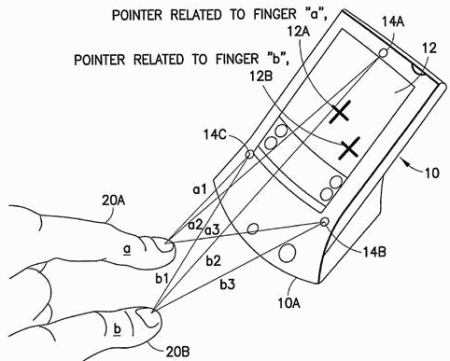
This 3D touchless control concept might sound a bit vague, but the filed patent is pretty clear about what Nokia wants to do: allowing users to control handsets without touching them. The new technology relies on Ultrasonic Transducers (or USTs) that emit high frequency sound waves, so, when a user gestures in front of the device, the waves are sent back to command the device's functions. Of course, there will be pre-set gestures and finger combinations for every command, for example a user can simply use the pick-up gesture to select an icon, or make the "C" letter with a finger for the phone's Calendar to be launched. In order to make everything easy, virtual pointers are shown on the handset's display, to indicate the position of your finger(s). All this will surely change the way we interact with mobile devices, and it looks like the future as seen in Sci-Fi movies is closer than we think.

An interesting fact about the Nokia patent is that the device sketched in the pictures doesn't really look like a Nokia phone, but rather like an early (hence obsolete) Palm handset. I couldn't say why is that, but Nokia knows better what it's doing, right?
While the multi-touch interface is ready to be integrated in Nokia's S60 phones, the 3D touchless control concept is just a patent application, only an idea, so it will take a while until it becomes reality. And speaking of reality, I can't help thinking that for some people it's still hard to get used with the touchscreen and they prefer the classical keypad, so probably the 3D touchless control will be much harder to get used to. But I guess we'll learn, the same way older generations learned to get used with the PC mouse and all the other things that were once innovative and are now part of the every-day life.

Wednesday, January 9, 2008

3G Nokia 3555 Launched at T-Mobile


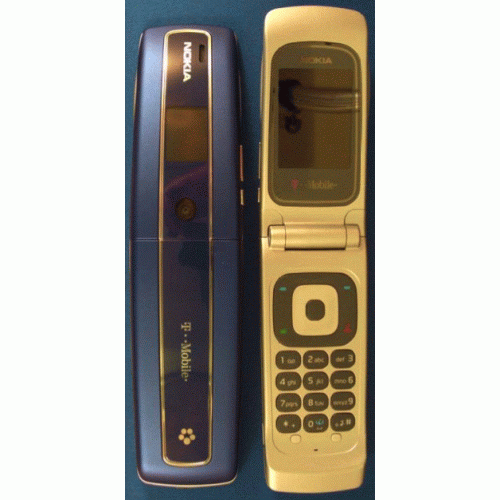
T-Mobile enlarges its range of mobile phones with Nokia 3555, an affordable low to mid-end clamshell with 3G capabilities. The handset will also be available in the US via AT&T,as announced a few months ago, and now FCC approved the UMTS 1700 MHz version of the phone too, so T-Mobile is ready to offer it to its subscribers.
Nokia 3555 is the little brother of Nokia 6555, another 3G clamshell that can be bought from AT&T for only $50 (with a two year contract, otherwise its price is $200). The 3555 model looks a lot like 6555 and has about the same dimensions, so, when open, it becomes quite a long device. Furthermore, Nokia 3555 has features similar to the ones packed in 6555, therefore we have MP3 and video player, Bluetooth, microSD card support, polyphonic ring tones and so on. What makes 3555 less appealing than 6555 is the fact that it has a smaller display that only supports a 128 x 160 pixels resolution. Moreover, the clamshell's built-in camera is a 0.3 Megapixel one that will surely not be able to offer photos at a decent quality. The camera included in Nokia 6555 isn't great either (1.3 Megapixel), but it's definitely better, so a similar one should have been packed in Nokia 3555 too. Currently the fourth-largest mobile operator in the US, T-Mobile tries to offer 3G to the masses by introducing affordable phones with this feature. Although there are no details about the price of Nokia 3555, it's quite possible that the handset will come for free (with a T-Mobile contract, of course). Well, 3G for free doesn't sound bad at all, but the little screen Nokia 3555 has could make users turn away from this offer. We'll see about that in a few months, after the phone hits the market.

Tuesday, January 8, 2008

Nokia Expects 4 Billion Mobile Phone Subscribers in 2009

At its annual investor event today, Nokia has presented key targets and forecasts for the next one to two years, while senior company executives described how Nokia's advantages as the leading device company underpin its strategic move into Internet services.
In his keynote address, Nokia President and CEO Olli-Pekka Kallasvuo said: "We have made great strides in strengthening Nokia's device portfolio over the past year. The improvements we've made have driven the profitable growth and market share gains Nokia has enjoyed in 2007, and we aim to continue the good momentum in our device portfolio next year."
Speaking about Nokia's opportunities in Internet services, Kallasvuo said: "Nokia's goal is to be the world #1 in bringing the Internet to mobile devices. We estimate that in 2010, the total Internet services market will be approximately 100 billion euros."
In brief:
Nokia financial targets (excluding special items, purchase price accounting, and the pending acquisition of NAVTEQ)
Nokia Group operating margin of 16-17% targeted within the next one to two years. This target is revised from the one to two year 15% operating margin target Nokia gave in November 2006.
Nokia Devices & Services operating margin targeted to be approximately 20% during the next one to two years.* (see reconciliation below).
Nokia Siemens Networks' target operating margin increasing to 10% by the end of 2009.
Nokia targets an improvement in the ratio of Nokia Group gross margin to R&D expenses and an improvement in the ratio of Nokia Group gross margin to sales and marketing expenses in 2008, compared to 2007.

Targets and forecasts for Nokia and the industry
Nokia expects:
Industry mobile device volumes in 2008 to grow approximately 10% from the approximately 1.1 billion units Nokia estimates for 2007.
Industry mobile device volume growth in 2008 to be above 15% in Asia-Pacific, China and Middle East & Africa, and below 10% in North America, Europe and Latin America.
Nokia expects the device industry to experience value growth in 2008, but expects some decline in industry Average Selling Prices (ASPs) primarily reflecting the increasing impact of the emerging markets and competitive factors in general.
The four billion mobile subscriptions mark to be reached in 2009, rather than in 2010 as previously forecasted.
The converged device market to reach approximately 120 million units in 2007 and 180 million units in 2008.
To ship approximately 200 million Nokia devices with an integrated digital camera in 2007 and more than 250 million units in 2008.
To ship approximately 145 million Nokia music-enabled devices in 2007 and more than 180 million units in 2008.

Nokia and Nokia Siemens Networks forecasts and targets for the infrastructure market and Nokia Siemens Networks
Nokia expects very slight growth for the mobile and fixed infrastructure and related services market in euro terms in 2008.
Nokia Siemens Networks aims to grow faster than the market in 2008.

* Devices & Services is not comparable to the current definition of "Devices", consisting of Mobile Phones and Multimedia combined, but is based on what will be the reportable business segment under our new organizational structure starting January 1, 2008. Devices & Services will be comprised of the totality of the existing Mobile Phones, Multimedia and Enterprise Solutions business groups - and will also include expenses previously reported under "Common Group Functions". A comparable figure for Devices & Services operating margin for the period Q1-Q3 2007 was approximately 19%.
Source: Nokia

Monday, January 7, 2008

Nokia 888 - The Mobile Phone of the future


If you think that the iPhone is cool, wait until you see the video presentation concerning the Nokia 888, conceptualised by designer Tamer Nakisci.

Okay, so the iPhone is a reality and this is merely a concept but it still servers to give a fascinating insight as to where the future of mobile phones may well be headed.

Featuring a flexible touchscreen which will allow it to adapt according to user taste and to facilitate extended functionality the Nokia 888 is an intriguing design that we can only hope will eventually see the light of day.

You can watch the spellbinding video of the Nokia 888 concept in action as well as view further imagery below and/or visit the site of designer Tamer Nakisci by clicking here.

Nokia E71 and Nokia E66, Soon Available as Nokia Liam and Nokia Dora


A few days ago, leaked specifications regarding Nokia E71 and Nokia E66 spread all over the Internet, but there were no details that we could be certain of.
Now we can know for sure that both E71 and E66 will come at Vodafone in the second quarter of 2008, as a leaked Vodafone Roadmap presentation for 2008 shows pictures and details about the two Nokia handsets.

The phones are named Nokia Liam (E71) and Nokia Dora (E66), which is a bit surprising, since the Finnish producer doesn't usually name its devices in this manner. Anyway, this is a less important aspect, what really matters is that the handsets will be soon available.

Nokia Liam (or E71) comes to replace Nokia E61i in the business-orientated Eseries family. The new handset is smaller than E61i, thus being more elegant, and it's a quad-band GSM / GPRS / EDGE phone with 3G / HSPDA connectivity, featuring GPS, Wi-Fi and a full QWERTY keypad. The phone packs a QWGA 2.36 inch screen, a powerful 3.2 Megapixel camera, a front camera for video calls and MicroSD card support for up to 8 GB of memory. Other features remained undisclosed, but most certainly they must be attractive and will make Nokia Liam one of the most wanted business phones in 2008.

Nokia Dora (or E66) will be available from Vodafone at a price of ₤280 (meaning about $550) and, as the Liam model, it's a quad-band GSM / GPRS / EDGE handset with 3G / HSPDA connectivity. The phone succeeds Nokia E65 and comes with the same classy slider design, packing a 3.2 Megapixel camera, GPS and MicroSD card support for a maximum memory of 8 GB. The leaked specifications say that Nokia Dora has a 2.4 inch screen with a 320 x 320 pixel resolution, but that's kind of impossible, since the phone's photo shows the screen doesn't have a square shape, but a rectangular one. So we should consider this a mistyping and wait for official details, either from Vodafone or from Nokia.


Sunday, January 6, 2008

Nokia E90 Communicator - Review


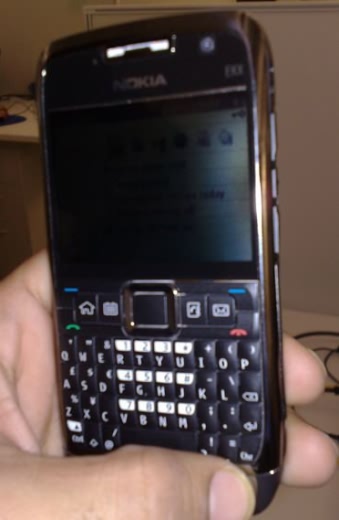
Nokia's Communicators have come a long way as the latest addition to the series, the E90, arrives more than a year after the 9300i Communicator. The E90 packs virtually all the features there are available right now including HSDPA, Wi-Fi, built-in GPS, a 3.2-megapixel camera, large 800 x 352-pixel LCD (not touchscreen, though) and a full QWERTY keyboard.

One of the biggest changes on the E90 from the earlier 9300i is the inclusion of a camera. Nokia explains the main reason for this is to capture a broader audience and also an increasing group of business execs who use their work phones after hours as well.

Unlike the 9300i which was based on the older S80 system, the E90 runs on the Symbian Series60 platform which has a more robust interface. Other business smart phones that are on the S60 operating system include the E61 and the E61i, both offering candy-bar form factors compared with the clamshell E90.Design
When there's no need for the QWERTY keyboard, we can rely on the numeric keypad and a 2-inch QVGA screen on the top face. That, however, comes at a price. The E90 isn't the smallest or the lightest smart phone, but we feel its size and weight can be justified by those who want a portable computing device. Unlike the Dopod U1000 which is also in the mini computer category, we could still fit the E90 snugly into a pants pocket.

The build quality is also excellent for this Nokia. However, the faceplate at the back of the E90 didn't gel very well at the top where the speakers are, but we're nitpicking and it could be just our review unit. When we're using the directional pad, delete and enter buttons on the QWERTY, we can feel its hollowness.

On the outside, the E90 is like any other candy-bar phone. In fact, most of the functions are accessible from the 2-inch screen save for a front-facing camera for 3G video calls. The beauty of the E90 shows up only when we open the clamshell and let it sit on the table like a mini laptop.

Accompanying a generous 4-inch 800 x 352-pixel LCD are numerous shortcut buttons for commonly used applications and also two customizable My Own keys for user-specific programs. A QCIF camera sits at the top left corner of this screen for video calls.

The QWERTY keyboard is a joy to use although it is still impossible to type with two hands like on a full-size keyboard. Most times we simply used our thumbs or two index fingers to type. Unlike the E61i and the Dopod C730, the QWERTY on the E90 is considerably wider so our digits have to move across a longer horizontal distance. That could be tiring after a while.

That said, the keys provide tactile feedback with a pitch of about 0.5mm (which may be enough for some, but not others). It would have been perfect if there was a more distinct feel between each button.

A flaw with the earlier 9300i was that the keyboard didn't light up. Fortunately, this is corrected on the E90 with a dedicated button to adjust the brightness of the screen and also to light up the QWERTY keyboard. The keyboard lights up with a brightness level that's enough for us to know where each key is, yet isn't too glaring to distract us from the screen.

Friday, January 4, 2008

Nokia Gaming Phone Has Been Revealed


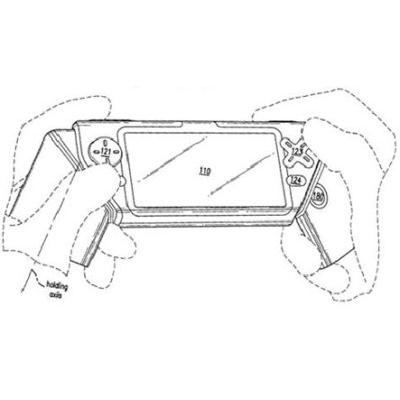
Well, by the look of it, there's not much time left till we'll put our hands on one of these devices. Just recently it has been revealed that Nokia registered a strange patent that looks just like the above mentioned 'gaming phone'.

The released patent speaks about a 'handheld electronic device' comprising a housing and a retractable handle, the device being arranged to allow the handle to be retracted into the housing along a sliding axis to provide a retracted handle position and extended out of the housing along the sliding axis.
Moreover, Nokia's patent looks more like a portable gaming console with camera and phone capabilities. The slim and easy to carry form of the device suggests that it will be an all-in-one device that will definitely make dedicated devices like MP3 players, PSP's, mobile phones or cameras less desirable.

More excerpts from the patent: "... is a computer gaming console, input elements 121, 122 being provided for user input by the left hand of a user and input elements 123, 124 being provided for input by the right hand of user. The games are displayed on the display 110, but in other embodiments, the games can additionally or alternatively be provided for display on another electronic device associated with the device. In the present case, the device 100 also allows the user to make radiotelephone calls (e.g. using cellular telephone functionality), take pictures (camera on reverse of device 100 is not shown), and play recorded/streamed audio (e.g. music/speech etc)."

Sadly, after the announced delay of the N-Gage mobile gaming platform, we're rather pessimistic about a possible official announcement anytime soon. Still, the idea looks great, maybe even better than Sony's PSP phone, but I wonder how viable is it?


Nokia 3110 Evolve


Based on an unremarkable and fairly inexpensive handset launched earlier this year, the 3110 Evolve is a basic tri-band GSM phone with a 128 x 160 pixel display, 1.3 megapixel camera, FM stereo radio, microSD expandable memory and an MP3 player, plus Bluetooth and USB connectivity.

It's a pretty lightweight handset at 87 grams, but you can tell by the specification that the screen is the 3110 Evolve's biggest weakness.

So what makes this different from a standard 3110? Well, Nokia say that there is "bio-sourced material on the covers", and they also say that the cover material is 50% renewable - so we guess that it uses some sort of plant-based hydrocarbon compound rather than plastic from fossil fuels. The Nokia 3110 Evolve comes in a much smaller sales package consisting of 60% recycled content, and there's a new more efficient phone charger. Nokia say that the charger uses "94% less energy than the Energy Star requirements" but does not give any figures comparing it to a standard unit.

In other words, the Nokia 3110 Evolve uses less plastic, is more efficient to transport and uses less power than a standard 3110. These are all good things, but add them together and they are hardly going to counteract all the billions of tons of carbon dioxide that humans are pumping into the atmosphere. Sure, getting a slightly greener phone (and using less plastic bags) is a good thing - but real change will require much harder lifestyle choices than this. And surely this sort of approach from manufacturers is the very least we should expect.

We think that there is a fatal flaw in Nokia's thinking - the Nokia 3110 Evolve is not the sort of phone that you'll want to hang onto for a few years. The limitations of the low-resolution screen will probably drive many people to replace it quite early. Our advice is this - buy a better phone, and keep it for longer. Then when you've finished with it, recycle it and raise some money for a worthwhile charity. Oh, and unplugging your phone charger when not in use is a good thing too.

The Nokia 3110 Evolve should be available during Q1 2008. No pricing was available at the time of going to press.


Nokia N95 Review


Nokia's N95 superphone is complicated, taking days for even the most experienced gadget journo to digest. That's why lots of reviews I've seen so far are either extremely light or 10,000 word stunners: This is one of those long ones. It's likely easier to pore over the phone yourself in our hardware and software gallery walkthroughs, and come up with your own opinion. But If you want the text heavy version, here's what's great and terrible about this phone.

Aside from call quality, why Nokia's N95 Rocks:
1.GPS: The GPS is really GPS, not some assisted-GPS that Sprint and Verizon have in their phones. That means you can really navigate with it, like I did, to streets around SF I wasn't too familiar with. (Specifically, the corner of Washington and Cherry, close to where the Zodiac killer blew away a Cabbie so many years ago.) The point of interest database is sizable and you can search for things by proximity (the nearest ATM or liquor store), and then get the phone dialing right up. Turn by turn is a subscription that'll cost you about $10 a month, and the voice nav won't read street names, but that, and the phone's persistant Lag aside, it rocks.

2.Camera: I detect a decent level of grain in these 5mp shots, and the shutter lag is horrendous, but WTF, it's a 5mp camera with a Carl Zeiss 2.8/5.6 autofocusing lens in a phone. There are great controls for ISO, white balance, sharpness, contrast, and flash. And video comes in at 640 by 480 at 30fps. Not shabby. And the editing programs are powerful, especially the photo editor's clip art feature. Proof is in the pudding: Check out Flickr's N95 photos.


3. Lifeblog: Like other N-series phones, this one can post any text/video/image you take with the phone to a blog. I'm addicted to this. This can be done through the Lifeblog software, which will combine text and images into a blog post on Typepad. The phone will send pictures Flickr's API, too. (And via Flickr's blog API, can send photos to most other blog ware.) Right now, Vox is the only site that will accept automated upload videos. But I'm willing to bet there's even a youtube uploader out there, considering the Symbian OS's dev community.

4. Media Playback: The mp3/video player is fairly straight forward, and that's why I like it. The speakers are unreasonably loud, in a good way, for a device of this side -- as loud as the Samsung K5 with external speakers -- and there's an EQ as well as visualizations. File support includes MP3/WMA/M4A, and AAC support for those soon to be unlocked iTunes/EMI files. The media playback buttons aren't the easiest to press, but they add to the simplicity and dedication this device has to AV. Add in support for Podcasts, even those of the video variety, and you're talking. (MPEG-4, H.264/AVC, H.263/3GPP, RealVideo 8/9/10)

5. Extras: I admit this is cheating on a list of 5, but all the little included apps really help bring the Nokia up. There are office document readers/editors, a standard convertor, calculator, zip utilities, GPS utilities, VOIP (Gizmo Project), a uPNP media server, and all your basic txt/sms/email/browsing/bluetooth, on and on and on. Feature-wise, it is what a phone could be, given today's technology, minus phone carrier greed. (All in our feature walkthrough.)


Why Nokia's N95 Sucks:
1. Battery: No matter what anyone says, the battery life on the N95 isn't good. You can justify it by considering how much power true GPS, WiFi, and those booming speakers take. Even turning off 3G access, as you won't find reception in the US, the phone will be begging for DC after an 18 hour day of moderate/heavy use.

2. HSDPA Europe only: This phone is a European variant, and its WCDMA 2100 radio can't tap Cingular's US band HSDPA. So, you're stuck with EDGE speeds when you're not close to WiFi. Here's a tip: Turn off the 3G support to save some battery life. And get used to using WiFi for the heavy Audio/Video Tranfers.

3. Laggy OS: I don't know whether to blame Symbian or Nokia, but I don't really care, who's fault it is: This phone is sluggish.
5. Hardware Feels Junky:Two words: Fisher Price. They should have packed these components into a denser package. The world's most powerful handset is also the thickest modern phone without a QWERTY. But consider all it does, and the fact that its still pocketable, and you can over look its rather portly 0.8 inch thickness. Full hardware rundown here.


5. Price: $750 dollars is an unsubsidized price, and I commend Nokia for bringing this unlocked beast of a phone to the US without carriers who'll lock up both the SIM slot and the multimedia features. But that's a lot of money. I'd find that more acceptable if the GPS didn't require a subscription, the office software edited without buying an upgrade, and if the rest of my complaints were firmly answered. You have to use this phone for yourself (or go on through the walkthroughs below) before you spend this much cash on a portable computer/phone/thingy. Even then, only the die hardest phone geeks and those who can benefit from the phone's liveblogging capabilities should consider it.

About This Blog

About This Blog

  © Blogger template 'Contemplation' by Ourblogtemplates.com 2008

Back to TOP  

Back To Top